

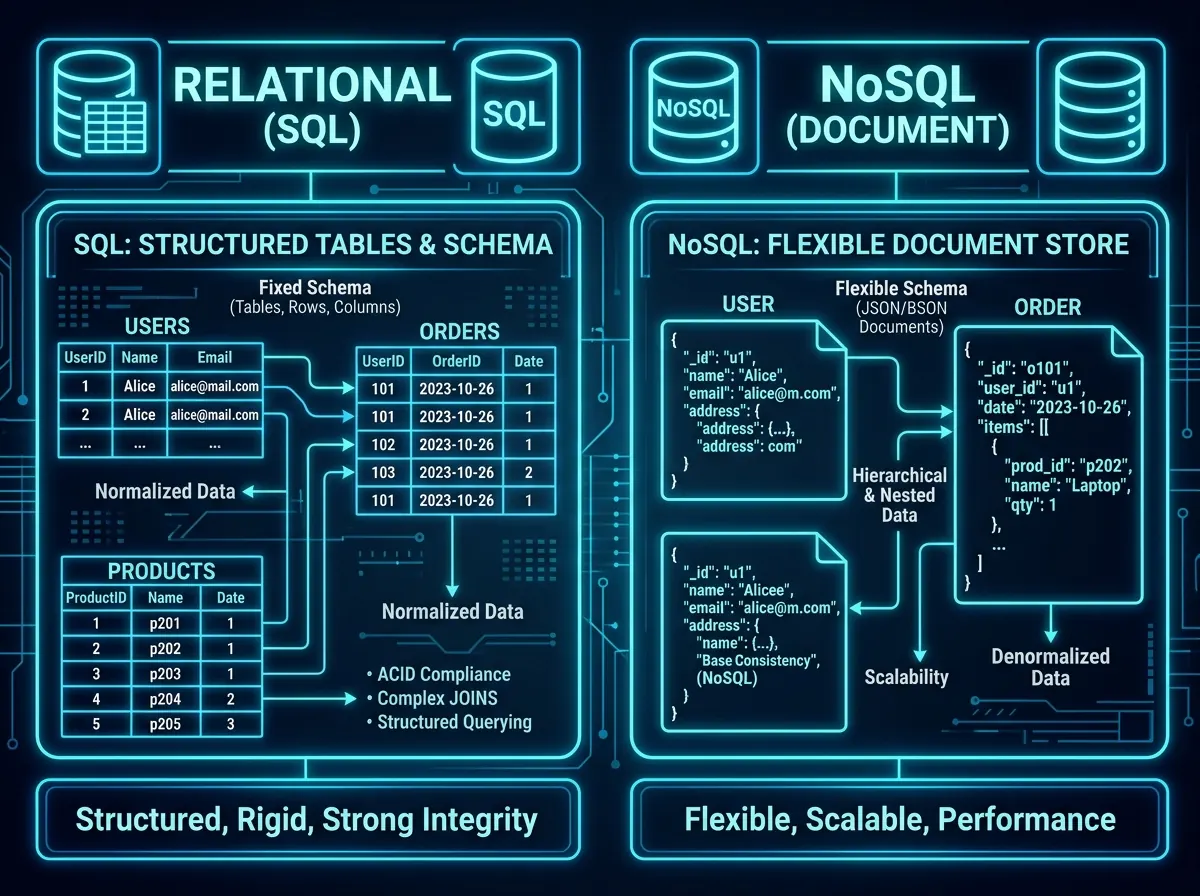
One of the most critical decisions during software design is choosing the database. Selecting the wrong model can lead to performance bottlenecks, scale constraints, and complex codebase rewrites.
The two main paradigms are Relational (SQL) and Non-Relational (NoSQL). Today, we compare the top industry-standard representatives: PostgreSQL and MongoDB.
PostgreSQL: Relational Reliability
PostgreSQL is a powerful object-relational database system known for its ACID compliance, support for complex queries, and deep data integrity features. It is ideal for systems where data structures are highly structured and consistent.
- When to use: Financial applications, ERP software, e-commerce ordering systems, and platforms requiring complex relational joins.
- Key strength: Strong schemas, transactional guarantees, and advanced indexing capabilities.
MongoDB: Flexible Document Store
MongoDB is a document-oriented database that stores data in flexible JSON-like documents. It is designed for horizontal scalability and fast, unstructured data ingestion.
- When to use: Content management systems, real-time analytics, personalization engines, IoT dashboards, and rapid MVPs where schemas evolve daily.
- Key strength: Dynamic schema flexibility, natural JSON structures, and built-in horizontal sharding.
// MongoDB document example
{
  "_id": "507f191e810c19729de860ea",
  "title": "Choosing PostgreSQL vs MongoDB",
  "category": "Database",
  "tags": ["SQL", "NoSQL"],
  "comments": [
    { "user": "Alice", "body": "Excellent read!" }
  ]
}
Planning a project like this? Harvions Tech offers Custom Software Development for startups and businesses. Talk to our team about your requirements.
Tags: