Cloud migration is no longer just a trend—it's a requirement for organizations aiming to achieve high scalability, reliability, and cost efficiency. However, migrating legacy infrastructure without a concrete DevOps plan often leads to downtime, security vulnerability, and cost overruns.
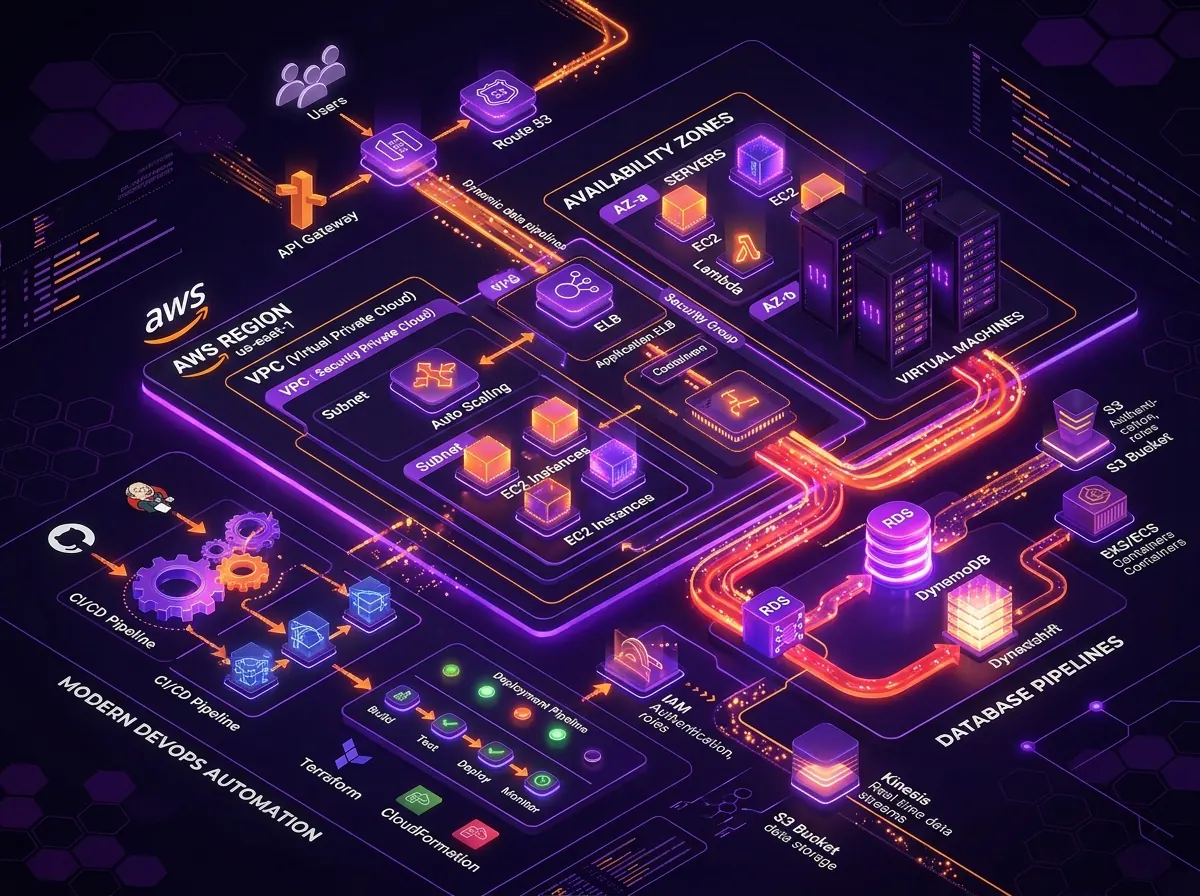
This article outlines a proven, step-by-step roadmap for migrating applications to Amazon Web Services (AWS) using Infrastructure as Code (IaC) and CI/CD pipelines.
Phase 1: Discovery & Assessment
Before moving any data, you must understand your current infrastructure dependency graph. Identify system resource requirements, database throughput, storage needs, and network boundaries.
Phase 2: Defining Infrastructure as Code (IaC)
Do not click around the AWS Management Console to set up resources. Define your entire cloud layout using modern declarative tools like Terraform or AWS CloudFormation. This guarantees version control, reproducibility, and security compliance.
# Basic AWS EC2 instance definition using Terraform
resource "aws_instance" "app_server" {
  ami           = "ami-0c55b159cbfafe1f0"
  instance_type = "t3.medium"
  tags = {
    Name = "HarvionsAppServer"
    Env  = "Production"
  }
}
Phase 3: Setting Up Automated Pipelines
Implement continuous integration and deployment (CI/CD) early. Use GitHub Actions or GitLab CI to build containers, run unit tests, and deploy services directly to AWS ECS, EKS, or Lambda. This minimizes human error and enables painless production updates multiple times a day.
Planning a project like this? Harvions Tech offers Cloud & DevOps for startups and businesses. Talk to our team about your requirements.
Tags: